
Whoa!
Google, the Internet search powerhouse that in recent years has expanded to include mapping of the stars as well as the surfaces of the moon and Mars and which has an ongoing collaboration with NASA’s Ames Research Center, provided a small seed grant to fund development of the wide-field digital cameras needed for the satellite. Because of the huge amount of data that will be generated by the satellite, Google has an interest in working on the development of ways of sifting through that data to find useful information.
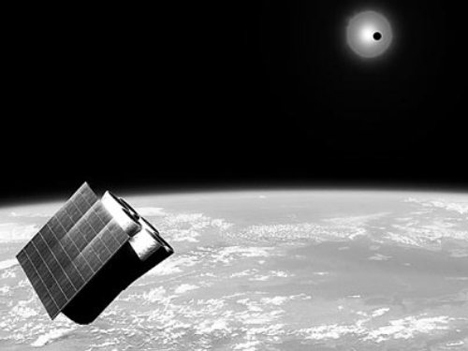
Dubbed the Transiting Exoplanet Survey Satellite (TESS), the satellite could potentially be launched in 2012. ‘Decades, or even centuries after the TESS survey is completed, the new planetary systems it discovers will continue to be studied because they are both nearby and bright,’ says George R. Ricker, senior research scientist at the Kavli Institute for Astrophysics and Space Research at MIT and leader of the project. ‘In fact, when starships transporting colonists first depart the solar system, they may well be headed toward a TESS-discovered planet as their new home.’